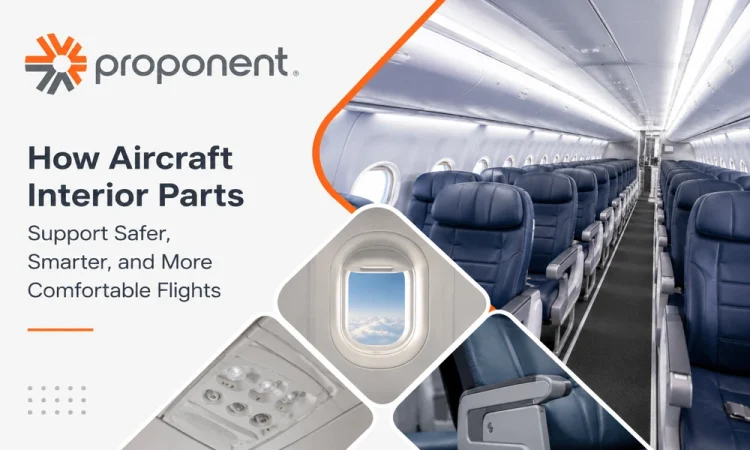
When passengers board an aircraft, they often see the comfortable seats and top bins. However, there is much more in the aircraft cabin. The purpose of aircraft interior parts is to enhance safety, maximize space, provide functionality for airlines, and increase the air travel experience. To be put on an aircraft, every piece of the airplane has to meet aviation standards.
The design of an efficient cabin interior contributes to both commercial airliners and private jets flights to the required level of security and reliability.
Essential Aircraft Interior Components Found Within Every Cabin
There are a lot of specialized components embedded in an aircraft cabin that come together to provide support during their journey for the passengers and crew.
Aircraft interior parts that matter the most include:
- Passenger seating systems
- Cabin sidewall and ceiling panels
- Overhead luggage compartments
- Emergency exit signs
- Cabin lighting
- Flooring and carpets
- Galley equipment
- Lavatories
- Cockpit interior panels
All components are engineered to work reliably even in high-stress situations.
Characteristics Every Good Inside Part Needs to Have
Some components of a cabin are not created equal. Quality aircraft interior components are engineered to meet the challenges of years of daily use, installing lightweight and safe aircraft interiors.
Important features include:
- Fire-resistant construction
- Lightweight materials
- High durability
- Easy maintenance
- Corrosion resistance
- Compliance with aviation regulations
These functionalities assist airlines to increase aircraft performance while keeping passengers safe.
Why Lightweight Materials Matter?
Lightweight aircraft has continued to be one of the personal pursuits of the aviation industry. Light weight aircraft interior means lower fuel consumption leading to reduced operating cost and smaller environmental footprint.
Engineered plastic is a commonly used composite material for manufacturers, along with advanced composite materials like lightweight aluminum alloys, and specialist honeycomb panels. These are lightweight materials that add strength to aircraft without adding weight.
Regular Maintenance Keeps Cabins Flight-Ready
Aircraft interiors experience constant use. On every flight, seats fill up, storage bins open, and close over and over again and hundreds of thousands of passengers trample across the flooring every year. Routine inspections detect worn or damaged aircraft interior components before they threaten safety or passenger comfort.
Maintenance teams typically check for:
Prompt replacement of damaged components preserves the cabin, extends its life, and keeps a professional appearance.
Choosing the Right Aircraft Interior Components
Planning a new aircraft or a cabin refurbishment project − more so, choosing the right components. Airlines and maintenance providers are advised to liaise with reputable manufacturers who offer approved products specific to their aircraft type.
Key points have to see product certifications, material quality, compatibility, durability, and maintenance required along with supply of replacement parts for many years from now.
Final Thoughts
Reliable aircraft interior parts do more to enhance the looks of an aircraft cabin. They promote passenger safety, improve comfort, reduce maintenance complexity, and help airlines lower their operating costs. Development of top-quality interior products, supported by appropriate maintenance activities, will enhance comfort and prolong the future operational performance and reliability of the aircraft. All of the well-designed cabin starts with reliable aircraft interior parts that are made to hold up against the growing demands of modern flying.