Outdoor living has changed tone. It is no longer about building something impressive and rarely using it. By 2026, homeowners are choosing outdoor kitchens that feel relaxed, practical, and quietly dependable. Spaces that work on a random Tuesday evening matter more than ones designed only for big gatherings.
You can feel this shift in the way people talk about their outdoor areas. Less excitement about gadgets. More interest in comfort, flow, and materials that age without drama.
Designed for Real Life, Not Occasions
One clear trend is how often these kitchens are actually used. People want setups that make every day cooking easier, not more complicated.
What homeowners are leaning toward:
- Layouts that follow natural movement, similar to indoor kitchens
- Worktops that handle heat, spills, and changing weather without stress
- Storage that stays dry and usable, season after season
There is also less patience for things that look clever but do not add value. If it does not earn its place, it is usually left out.
Materials That Settle in Over Time
Highly polished finishes are slowly stepping aside. In their place, softer textures and grounded materials are taking over. Stone, concrete-style surfaces, and weather-ready cabinetry are popular for one simple reason. They last.
You will see more:
- Matte finishes with subtle variation
- Natural colour palettes that feel calm rather than trendy
- Surfaces chosen for touch and durability, not just appearance
- These kitchens are not trying to impress anyone. They just work. And honestly, that feels refreshing.
Cooking Becomes Part of the Conversation
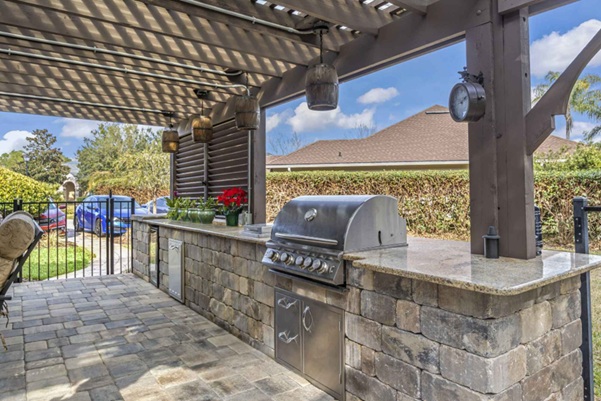
Outdoor cooking is no longer something happening at the edge of the space. A proper BBQ outdoor kitchen brings cooking into the centre of the gathering. The cook is no longer separated. They are part of it.

Homeowners often ask for:
- Clear prep space right next to cooking zones
- Practical ventilation that does its job quietly
- Room to cook, serve, and talk without bumping into people
- It changes the energy of the space. Cooking feels shared, not rushed.
A Closer Look at What People Expect
Modern outdoor kitchens are judged on small things. How smoothly drawers open. Whether doors feel solid. How easy surfaces are to wipe down after a long evening.
There is also growing interest in modular designs. Being able to adapt or extend the kitchen later gives people peace of mind. Needs change. Families grow. Flexibility matters more than ever.
Blending Indoors and Outdoors
Another strong trend is cohesion. Outdoor kitchens are no longer designed to stand apart from the house. They are meant to flow naturally from indoor spaces.
You can see this approach clearly on curated product pages featuring Whistler Cirencester outdoor kitchens, where the focus is on how the kitchen fits into everyday living rather than standing out as a feature piece.
The Importance of Small, Thoughtful Details
Access and usability are often underestimated. Features like Whistler Cirencester double doors are valued because they simply make life easier. Storage feels more open. Movement feels smoother. These things are noticed, especially during busy moments.
Retail platforms such as BBQs2u reflect this mindset too. Outdoor kitchens are presented as long-term lifestyle investments, not quick upgrades. Quality, layout, and comfort lead the conversation. By 2026, outdoor kitchens are expected to feel lived in, not staged. Calm. Reliable. A place you naturally gravitate toward, even when there is no special reason to be outside.